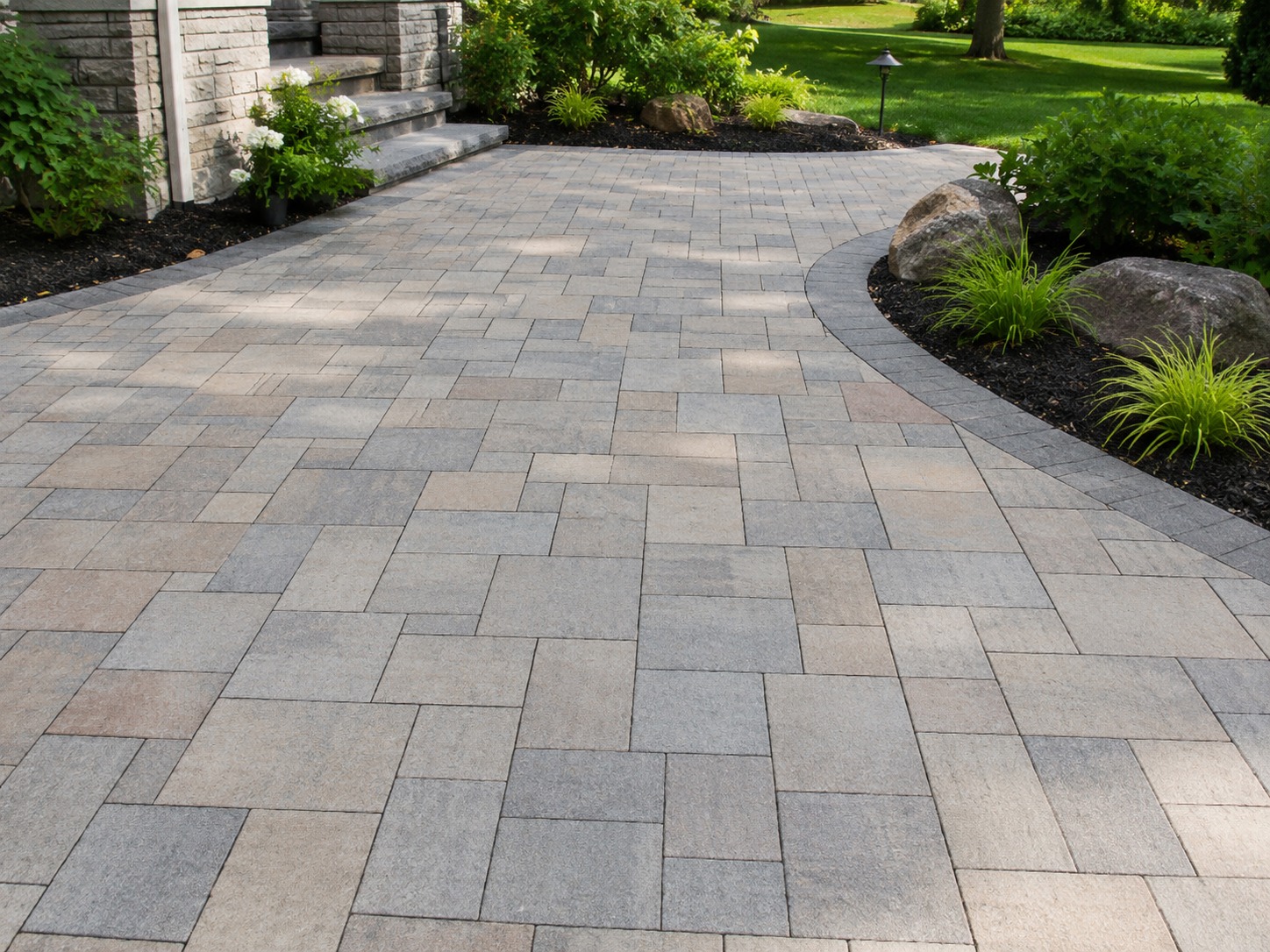
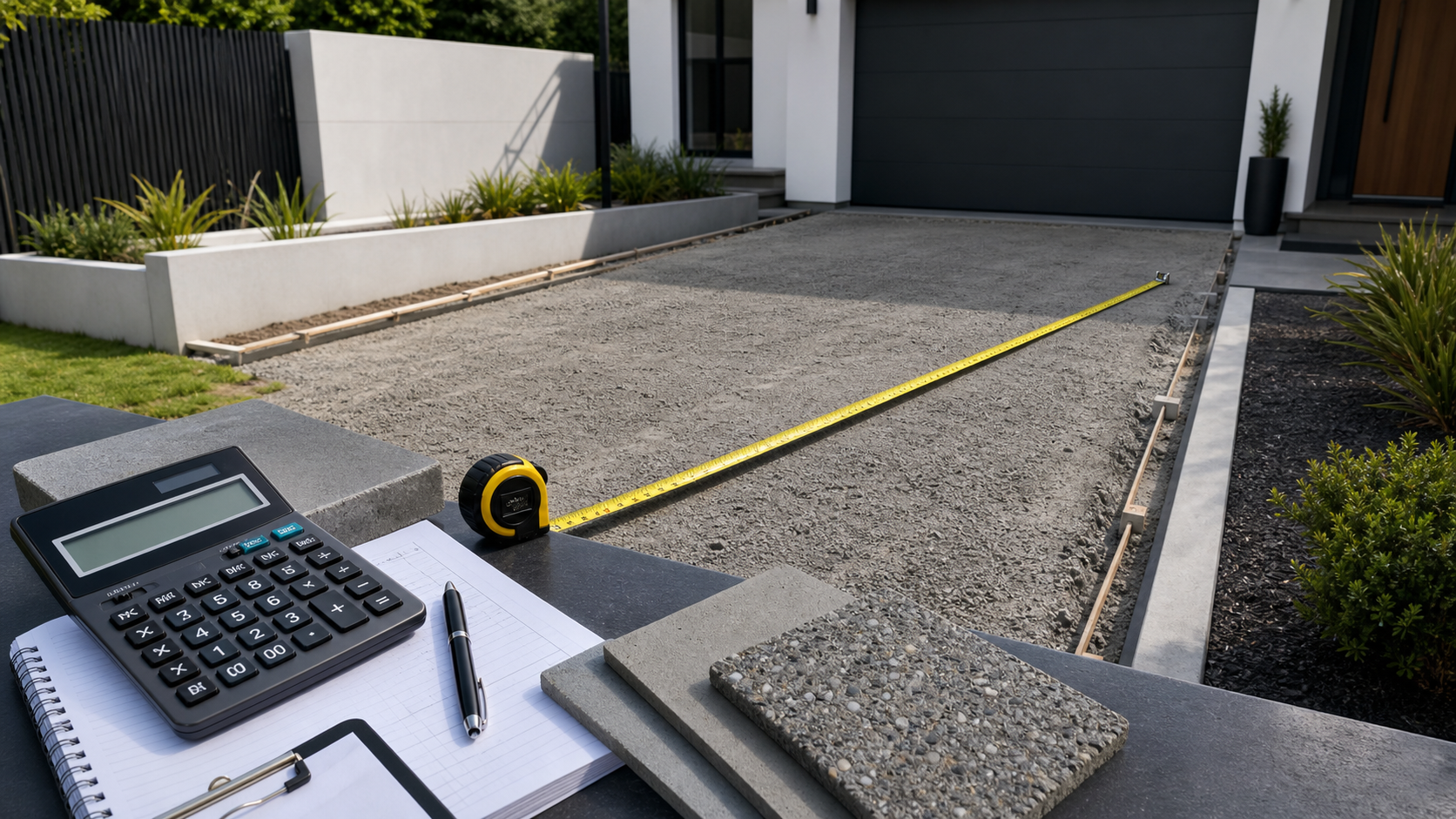
Professional paving contractors work to string lines or laser levels to ensure consistent joint widths, straight lines, and accurate pattern alignment. For complex patterns like herringbone, running bond, or basketweave, precision during laying prevents cumulative errors that cause crooked lines and misaligned courses.
Edge restraints are critical to long-term stability. Without solid restraints at the perimeter, pavers gradually spread and shift outward under load. For residential driveways, a concrete haunch poured along the outer edge is the most durable solution.
Once all pavers are laid, joints are filled with kiln-dried jointing sand or a stabilised compound, then the plate compactor is run over the surface multiple times. Poorly filled joints lead to weed growth — a common complaint with paving in Auckland's warm, damp climate.
For concrete patios and courtyard areas, the same principles apply: correct excavation, compacted subbase, precise laying, and proper drainage integration.