Costs & Pricing

Exposed Aggregate Concrete Price NZ: What It Costs in 2026

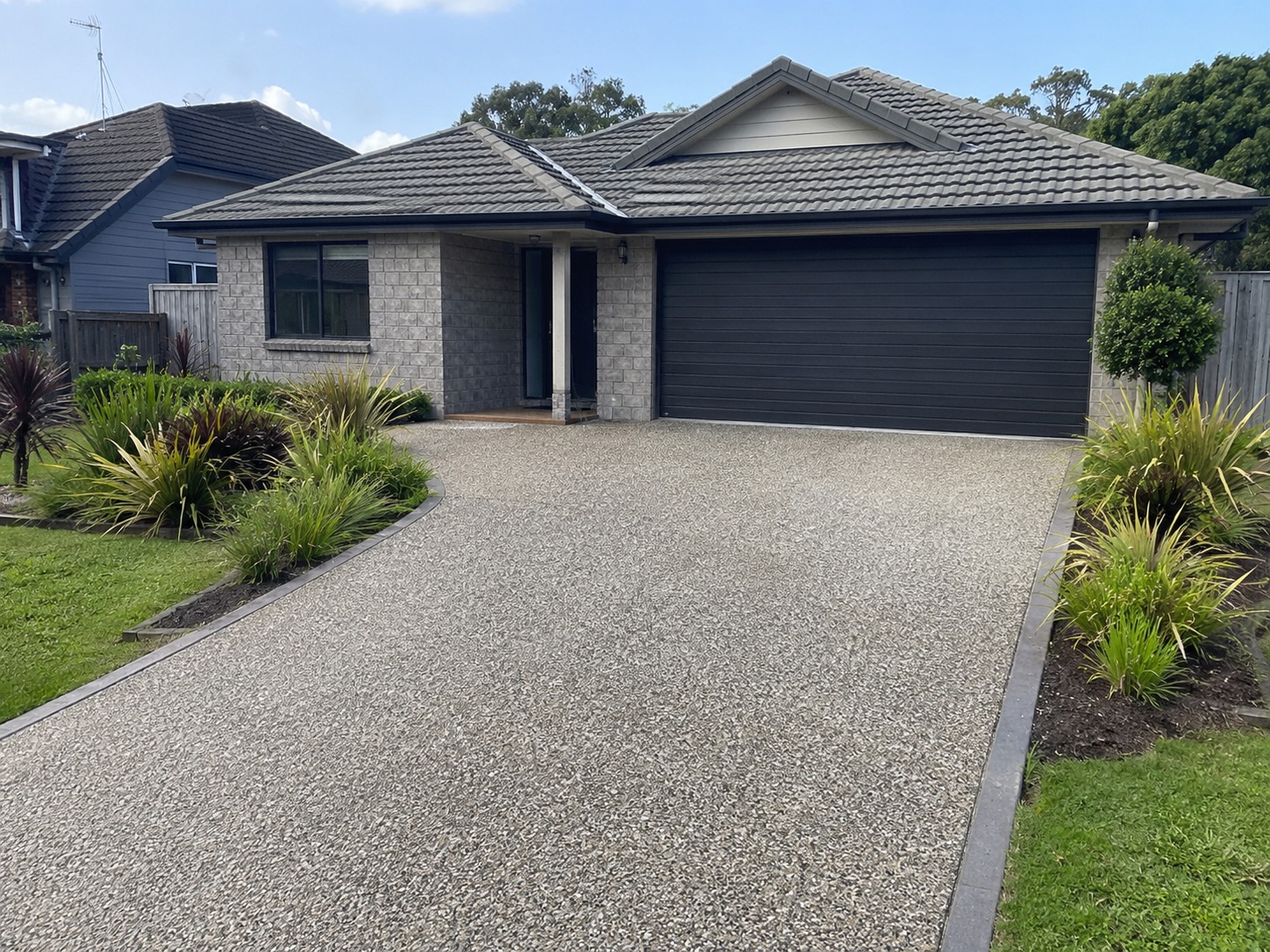
Exposed aggregate driveway Auckland

The short answer:

  • Typical rate: $150–$250/m² for exposed aggregate concrete in New Zealand, with Auckland decorative work reaching $280/m² at the top end.
  • Premium over plain: roughly $60–$90/m² more than a plain broom finish, which is about 55–70% on top.
  • Worked example: a 40 m² single-car driveway lands around $6,000–$10,000 for the exposed aggregate surface, against roughly $3,600–$6,400 for the same area in plain concrete.
  • GST basis: every figure in this article is GST-inclusive unless stated otherwise. Trade quotes are often plus GST, which is a 15% difference worth checking.

All of these are guidance ranges. The only number that means anything for your property is the one that comes after someone has stood on the site and measured it.

What does exposed aggregate concrete cost per m² in New Zealand?

The typical band is $150–$250/m², GST-inclusive, supplied and laid on a straightforward residential site. In Auckland, decorative finishes run from about $150/m² up to $280/m² at the top end. Some sources quote as low as $100–$150/m², and that figure is not wrong so much as it is describing a different job.

That range covers the concrete, the decorative stone, the placing, the finishing and the exposure work. It usually excludes excavation, spoil removal, drainage and the vehicle crossing.

The published ranges, and why they disagree

Search for this price and you will find figures from about $100/m² to about $280/m² for what looks like the same finish. That spread is not sloppiness. Five things are moving at once: the stone you choose, how the surface is exposed, whether sealing is in the quote, the size and access of the area, and whether the number is plus GST or including it.

Here is how to place a quote you are holding:

If your quote sits nearIt usually means
The low end ($100–$150/m²)Standard grey stone, seeded rather than through-mix, unsealed, a large flat area with good access. Often quoted plus GST.
The middle ($150–$220/m²)Selected stone, sealed once, a normal residential site with reasonable truck access and no unusual prep.
The high end ($220–$280/m²)Specified or imported stone, retarder or a polished finish, sealed, and a small or awkward site. Usually quoted GST-inclusive.

If two quotes for your driveway differ by $60/m², one of the rows above almost always explains it. The cheaper contractor is often not cutting corners, they are quoting a different job.

Are these prices GST-inclusive?

Trade and supplier sources usually quote plus GST. Consumer-facing pricing guides usually quote GST-inclusive. A homeowner comparing one of each is comparing figures 15% apart without knowing it, which on a $9,000 driveway is well over $1,000 of imaginary difference. Ask every contractor which basis their number is on and write it down next to the figure.

How much more is exposed aggregate than plain concrete?

Plain concrete driveways sit at roughly $90–$160/m² in Auckland. Set that against the $150–$250/m² exposed aggregate band and the premium falls out.

FinishTypical NZ ratePremium over plain
Plain broom finish$90–$160/m²Baseline
Exposed aggregate, typical$150–$250/m²About $60–$90/m² more, or 55–70%
Exposed aggregate, upper end (selected stone, sealed, Auckland)up to $280/m²Up to about $120/m² more, or 75%

Because both sides of that comparison are ranges, the premium is a range too. Anyone quoting you an exact percentage is guessing at a number they cannot know without seeing your site.

In whole-driveway terms, on a 40 m² single-car area the step up from a plain broom-finish concrete driveway to exposed aggregate is roughly $2,400–$3,600 on the total job. That is the real decision, and it is worth weighing against how long you plan to stay.

What the extra money actually buys

Not the stone, mostly. The slab underneath is identical whichever finish goes on top of it.

The New Zealand Master Concrete Placers Association *Code of Practice for Concrete Placement of Domestic Driveways* asks for the same thing either way: a minimum 100 mm slab, concrete of 20 MPa or stronger, a 100 mm compacted Gap 20 sub-base, steel mesh in the top third of the slab, all concrete vibrated, and a minimum four-day water cure. None of that changes because you chose a decorative finish.

The premium is almost entirely in the surface. You are paying for the decorative stone, an extra labour stage that has to happen inside a narrow window, the wash-off and disposal, the sealing if it is included, and the risk the contractor carries. A broom finish that comes up wrong can be re-floated on the day. An exposure that goes wrong is permanent, and that risk is priced into every decorative quote.

Our exposed aggregate driveway installation page covers what the process looks like on site.

The choices that move an exposed aggregate price

The generic drivers apply to any driveway in any finish: area size, slab thickness, site access, ground conditions, drainage and removing an old driveway. Those are covered properly in our guide to general concrete driveway cost factors. Everything below is specific to exposed aggregate.

ChoiceCheaper endDearer endEffect on the rate
Stone type and sizeStandard grey river stoneSelected or imported decorative stoneMaterial line item, and the most visible upgrade on a quote
MethodSeededThrough-mixThrough-mix carries decorative stone through the full slab depth
ExposureWash-offRetarder, then honed or polishedAdds material, labour, and a separate grinding operation
SealingNot sealedSealed with a premium sealerCosts more on day one, less over the following decade

There is no honest single figure for what each of these adds, because it depends on stone supply, area and access. What is reliable is the direction each choice pushes the number.

Stone type and size

Standard grey river stone is the default and the cheapest option. Selected or imported decorative stone is a material upgrade and usually the single most visible difference between two quotes for the same driveway.

Size matters as much as type. Larger stone needs a deeper exposure and more washing to reveal it properly, while smaller stone gives a tighter, more uniform surface. If you are choosing on appearance, ask to see a finished driveway in the same stone rather than a sample board, because samples are indicative only. Our coloured aggregate options page shows the range commonly available in Auckland.

Seeded or through-mix

These are two different jobs, and almost nobody explains the difference before quoting.

Through-mix means the decorative stone arrives in the concrete from the plant. The stone cost applies across the full depth of the slab even though only the top few millimetres are ever seen, so it costs more per cubic metre. It is also more forgiving, because the stone is evenly distributed by definition.

Seeded means standard concrete is placed and the decorative stone is broadcast across the surface and worked in by hand. The stone cost applies only to the surface, so the material bill is lower. It is a skilled hand operation, and uneven seeding shows permanently once the surface is exposed.

A quote should tell you which method it is. Two quotes using different methods are not comparing like with like, and this is one of the genuine reasons prices for the same driveway differ by thousands.

How the surface is exposed: washing off, retarder, or polishing

Three routes, three price points.

Wash-off is water, a broom and sometimes a pressure wash, applied at the right moment. It is the cheapest route, the most timing-critical, and the most exposed to weather on the day.

Chemical surface retarder is sprayed onto the fresh surface, holding back the top layer of cement paste while the concrete underneath sets normally. That widens the working window and gives a more consistent depth of exposure. It adds material and labour cost, and it buys down risk.

Honing or polishing is a separate grinding operation on the exposed surface afterwards. It is the dearest route by a clear margin and produces a very different look from a washed finish.

Weather is a real cost factor here, not a scheduling excuse. The NZMCPA code advises against placing decorative work on hot, sunny or windy days, and notes that polythene under an exposed aggregate slab can delay the wash-off time. Timing risk is exactly what a contractor prices into decorative work, so a placer who reschedules your pour because a northerly is coming through Whangaparāoa is protecting the finish you are paying for.

Sealing

Check whether sealing is in the quote at all, because it is often listed separately or left out. Sealer type changes both appearance and price, and a sealed surface looks noticeably darker and richer than the same slab unsealed.

An unsealed driveway is cheaper on day one and dearer to keep looking right. Sealing resists oil staining, slows moisture penetration and holds the colour. It is also the start of an ongoing cost, which is the part most quotes never mention.
What to expect from the finished surface

Decorative concrete is a site-made product, not a manufactured one. The NZMCPA code is blunt about what that means, and it is worth knowing before the truck arrives rather than after.

  • Colour consistency, surface texture and flatness will vary across a finished slab, and these variances are not grounds for rejection.
  • Colour swatches and samples are indicative only. The finished driveway will not match a sample board exactly.
  • Concrete can crack. The code states directly that it is not possible to guarantee the absence of cracking, regardless of the processes and placing systems used.
  • Steel mesh provides crack control. It does not increase the load capacity of the slab.
  • Control joints are cut 24–48 hours after placing at around 3 m centres, and they will be visible in the finished surface.

NZS 3114:1987 covers concrete surface finishes if you want the standard itself, and CCANZ Information Bulletin IB80 is a useful read on residential driveways and paths. A contractor who explains all of this before pouring is doing you a favour. One who promises a flawless, perfectly uniform surface is setting up an argument neither of you can win.

The cost most quotes leave out: resealing

Exposed aggregate is not a pour-and-forget surface. The sealer that makes it look good on handover breaks down under sun, rain and tyres, and it needs redoing.

NZ suppliers commonly quote a resealing interval of every 3–5 years, tightening to 2–3 years under heavy traffic or harsh exposure, at roughly $4–$8/m². These are market ranges rather than a code requirement, so treat them as planning figures and confirm the interval with whoever seals your driveway. Auckland conditions push toward the shorter end: high rainfall, strong summer sun and salt air along the eastern bays and the North Shore coast all work on a sealer faster than a sheltered inland site does.

Over a decade on a 40 m² driveway:

ItemFrequencyTypical rate10-year cost on 40 m²
Initial install, exposed aggregateOnce$150–$250/m²$6,000–$10,000
ResealingEvery 3–5 years$4–$8/m²$320–$960 (2–3 cycles)
Total over 10 years$6,320–$10,960

Resealing over ten years is a real number, but under 10% of the install cost in most cases. Skipping it is what makes an exposed aggregate driveway look tired years before the concrete is anywhere near worn out. Our concrete resealing service covers driveways we did not originally pour as well as ones we did.

For a free on-site quote on exposed aggregate anywhere in Auckland, call 09 977 9966.

What exposed aggregate costs for a path or patio

An exposed aggregate path costs less in total than a driveway and more per square metre. The reason is fixed costs. Set-up, travel, the minimum concrete load and a full crew on site for a short pour cost roughly the same whether the area is 8 m² or 40 m². Spread across fewer square metres, the rate rises, and a 10 m² path can sit well above the $250/m² top of the driveway band.

For that reason, small decorative paths are often quoted as a lump sum rather than a rate. That is usually the more honest way to price the work. Our concrete paths and footpaths page covers the specifications that apply.

What the per-m² rate does not include

A quoted rate for exposed aggregate is a rate for the finished slab. Site work sits outside it. Expect the following as separate line items:

  • Excavation, spoil removal and disposal
  • Hardfill and base course
  • Breaking out and carting away an old driveway
  • Drainage and stormwater connections
  • Difficult access, or pumping where a truck cannot reach the pour
  • The vehicle crossing

Pumping is charged as an extra and rates vary widely with reach and site conditions, so ask for it as a specific line rather than assuming it is folded into the rate.

Two separate bodies handle approvals, and they are routinely confused. Auckland Transport issues the vehicle crossing permit, and written approval from AT is required before any work starts on a vehicle crossing. Auckland Council grants resource consent and building consent, and administers the Auckland Unitary Plan, where Chapter E27 covers vehicle access. Approval from one does not cover the other. Auckland Transport publishes its vehicle crossing application process online, and Auckland Council sets out its driveways and access standards separately.

Frequently asked questions

How much does an exposed aggregate driveway cost in NZ?

Expect $150–$250/m² GST-inclusive, supplied and laid on a straightforward site, with Auckland decorative work reaching about $280/m² at the top. On a 40 m² single-car driveway that is roughly $6,000–$10,000 for the surface. Site preparation, drainage and the vehicle crossing are usually separate, and only a site visit will confirm the figure for your property.

Is exposed aggregate more expensive than plain concrete?

Yes, by roughly $60–$90/m², which is about 55–70% on top of a plain broom finish. On a 40 m² driveway the step up costs around $2,400–$3,600 in total. The slab underneath is specified the same either way, so the premium buys the stone, the exposure stage and the sealing.

How often should an exposed aggregate driveway be resealed?

NZ suppliers commonly recommend resealing every 3–5 years, at roughly $4–$8/m². Heavy traffic, full sun and coastal salt air shorten that toward 2–3 years, which applies to a lot of Auckland properties. These are market guidance figures rather than a standard.

Why are my exposed aggregate quotes so different?

Four things usually explain it: the stone specified, whether the job is seeded or through-mix, whether sealing is included, and whether the number is plus GST or including it. GST alone accounts for a 15% gap between two otherwise identical quotes.

Why is my exposed aggregate driveway patchy in colour?

Some variation is normal. The NZMCPA code states that colour consistency, surface texture and flatness will vary on decorative concrete, and that these variances are not grounds for rejection. Genuine defects such as a badly uneven exposure depth or debonding stone are a different matter and worth raising with your placer.

Does exposed aggregate need to be sealed?

Sealing is not structurally required, but it is strongly recommended. It resists oil staining, slows moisture penetration and holds the colour. Budget for the initial seal and for resealing every few years afterwards.

Getting an accurate number for your site

Ranges are useful for setting a budget and useless for signing a contract. To make quotes comparable, ask each contractor to itemise five things:

  • The exposure method — seeded or through-mix, and wash-off, retarder or polished
  • The stone, and whether it is a standard supply or a selected one
  • Whether sealing is included, and which sealer
  • Whether the rate is plus GST or GST-inclusive
  • What base preparation, spoil removal and disposal are costed at separately

Any contractor who will not put those five on paper is not quoting, they are estimating. Once you have three quotes broken down that way, the differences stop being mysterious.

We are a local, fully insured Auckland team quoting exposed aggregate work across the region, from Takapuna and Albany through to Henderson, Te Atatū, Papakura and Ōtāhuhu. For a free on-site measure and quote, call 09 977 9966 or email [email protected].

Ready to start your Auckland concrete project?

Contact Auckland Concrete Driveways for a free on-site quote. We cover central Auckland, North Shore, West Auckland, and South Auckland.